Motorola Moto G User Guide
http://blog.clove.co.uk/2013/11/15/motorola-moto-g-user-guide/
Apple & Samsung take massive 109% of mobile industry profits while competitors lose money
The mobile market continues to be a two-horse race for profitability between Apple and Samsung, with the two rivals commanding 109 percent of profits — a number made possible because its competitors are actually losing money in the smartphone space.

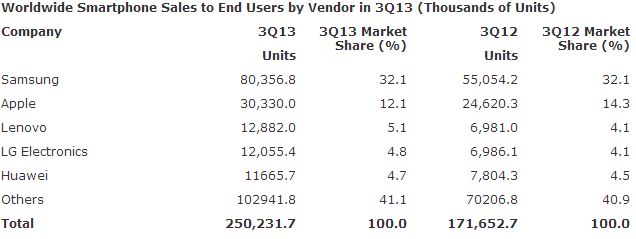
The latest data from Canaccord Genuity, shared with AppleInsider by analyst T. Michael Walkley on Thursday, estimates that Apple took 56 percent of the operating profits for feature phones and smartphones in the third quarter of calendar 2013. Coming in close second was Samsung, which took 53 percent of industry profits.
In contrast, all of the competition lost money, with the exception of Sony, which broke even during the quarter. The biggest loser was struggling BlackBerry, which represented a negative 4 percent of industry profits, followed closely by Google-owned Motorola, taking negative 3 percent.
Nokia, LG and HTC were all about even with one another, each representing negative 1 percent of mobile profits, according to Canaccord Genuity.
Walkley noted that the share controlled by Apple and Samsung is likely lower when the profits of Chinese vendors such as Lenovo, ZTE, Huawei and Coolpad are included. However, Chinese manufacturer profitability data is not available, and could not be included in the industry-wide comparison.
Apple actually saw its share of profits increase from 53 percent in the second quarter to 56 percent in the third quarter, despite the fact that the company was transitioning to the launch of the iPhone 5s and iPhone 5c late in the quarter. Walkley said Apple's greater share of profits came to slightly higher sequential iPhone unit sales, as well as more pronounced losses from BlackBerry and HTC.

"Given a full quarter of iPhone 5s/5c sales, we anticipate very strong operating profit share for Apple during the holiday quarter," the analyst wrote. "Further, we believe Apple's value share of the handset market is even higher than our estimates... considering Apple's dominant share of the tablet market, as some Android OEMs include tablet sales in reported smart device sales and profits."
In fact, when tablets, notebooks and other mobile devices are included, Apple earned more than Samsung, LG, Nokia, Huawei, Lenovo and Motorola's mobile divisions combined, according to separate data released last month by Strategy Analytics.
Concentrating on phones alone, Apple and Samsung are estimated to have accounted for more than 100 percent of industry profits for some time now. Prior to Thursday's data, the most recent figures from Julyshowed the rival companies accounting for 103 percent of industry profits.
http://appleinsider.com
The latest data from Canaccord Genuity, shared with AppleInsider by analyst T. Michael Walkley on Thursday, estimates that Apple took 56 percent of the operating profits for feature phones and smartphones in the third quarter of calendar 2013. Coming in close second was Samsung, which took 53 percent of industry profits.
In contrast, all of the competition lost money, with the exception of Sony, which broke even during the quarter. The biggest loser was struggling BlackBerry, which represented a negative 4 percent of industry profits, followed closely by Google-owned Motorola, taking negative 3 percent.
Nokia, LG and HTC were all about even with one another, each representing negative 1 percent of mobile profits, according to Canaccord Genuity.
Walkley noted that the share controlled by Apple and Samsung is likely lower when the profits of Chinese vendors such as Lenovo, ZTE, Huawei and Coolpad are included. However, Chinese manufacturer profitability data is not available, and could not be included in the industry-wide comparison.
Apple actually saw its share of profits increase from 53 percent in the second quarter to 56 percent in the third quarter, despite the fact that the company was transitioning to the launch of the iPhone 5s and iPhone 5c late in the quarter. Walkley said Apple's greater share of profits came to slightly higher sequential iPhone unit sales, as well as more pronounced losses from BlackBerry and HTC.
"Given a full quarter of iPhone 5s/5c sales, we anticipate very strong operating profit share for Apple during the holiday quarter," the analyst wrote. "Further, we believe Apple's value share of the handset market is even higher than our estimates... considering Apple's dominant share of the tablet market, as some Android OEMs include tablet sales in reported smart device sales and profits."
In fact, when tablets, notebooks and other mobile devices are included, Apple earned more than Samsung, LG, Nokia, Huawei, Lenovo and Motorola's mobile divisions combined, according to separate data released last month by Strategy Analytics.
Concentrating on phones alone, Apple and Samsung are estimated to have accounted for more than 100 percent of industry profits for some time now. Prior to Thursday's data, the most recent figures from Julyshowed the rival companies accounting for 103 percent of industry profits.
http://appleinsider.com
Samsung maintains lead in worldwide mobile market despite stagnant share
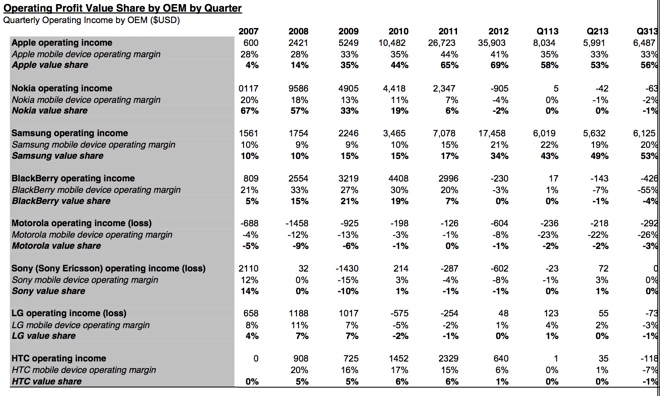
Android is continuing to take over the mobile market as the months go by, with the latest figures putting its market share at nearly percent. While Samsung still holds the lion’s share of the Android market, according to the latest data released by Gartner for worldwide smartphone sales, Samsung lead over total smartphone sales remained stagnant with 32 percent market share in the third quarter of 2013.
Samsung did increase its lead over Apple in the global smartphone market, but that was more because of Apple’s declining share rather than an increase in Samsung’s. Of course, Samsung probably isn’t sweating it, since they did manage to grab 53 percent of to all mobile industry profits, while the Galaxy Note 3 helped them maintain the lead over other manufacturers. Meanwhile, when counting both feature and smartphones, Samsung’s share managed to climb nearly three percent to 25.7 percent of the global share, followed by Nokia at 13.8 percent.
Hit the source link for all the details on Gartner’s market share figures.
Samsung and Apple take all the profits, leave nothing but scraps for other manufacturers
The mobile industry has been a two-horse race for quite some time now, with Android and iOS being the most popular operating systems, and Samsung and Apple have similarly been the two major manufacturers that dwarf all others in the market. Well, the dominance of the two carries over to mobile industry profits as well, as according to the latest data from Canaccord Genuity, Samsung and Apple account for 109 percent of profit in the mobile market. Apple took the crown with 56 percent of profits, while Samsung came in close with 53 percent.
You’re probably wondering why the profit share is 109 percent instead of 100 percent. Well, that’s because other manufacturers are actually losing money in the mobile business (BlackBerry was most affected, representing a negative 4 percent of industry profits), with only Sony managing to break even and keep things balanced. The share controlled by Apple and Samsung would have been lower if the profits of Chinese companies was included in the data, though that information is currently unavailable.
First test shot from second-generation Galaxy Camera (EK-GC200)
First test shot from second-generation Galaxy Camera (EK-GC200). Original: https://plus.google.com/u/0/b/112200452723264454895/112200452723264454895/posts/5yudgeuh14f … pic.twitter.com/nl2HFljqNO

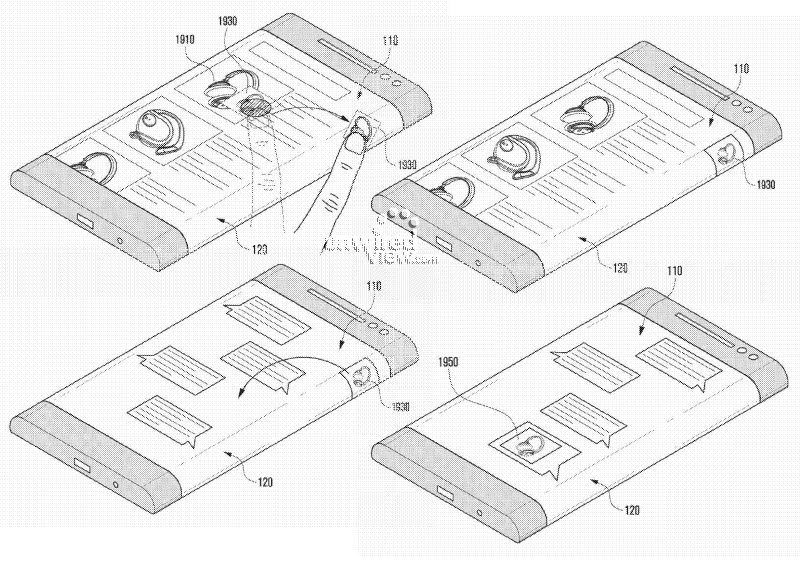
Samsung smartphone with wraparound display coming next year, patent shows usage scenarios
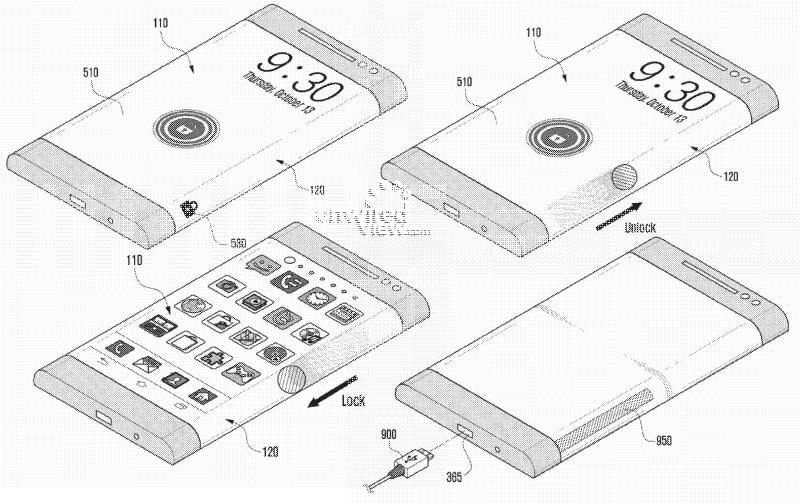
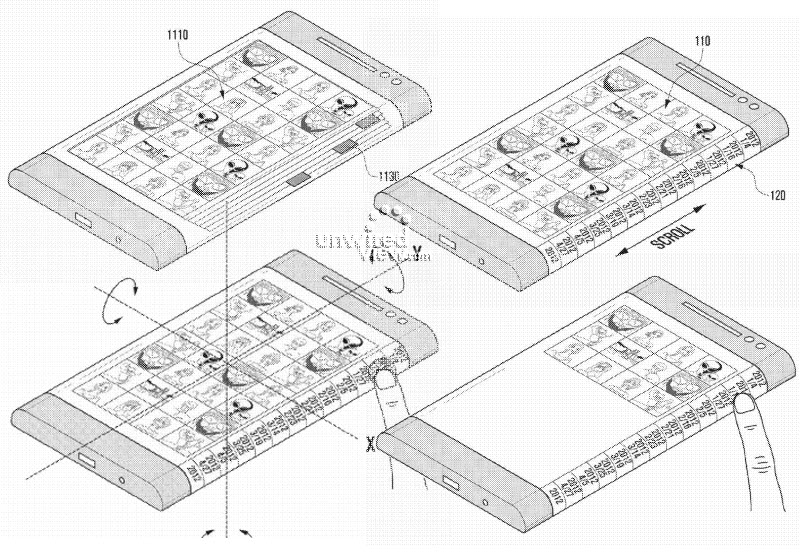
The Galaxy Round’s curved display does offer a few benefits, but they’re mostly just related to passive usage, i.e. looking at and viewing content on the screen. However, the first “flexible” display-toting smartphone Samsung showed us way back in January this year did have practical use, such as showing the time and date on the curved side pane of the display, and now a patent application shows the different ways in which a screen bent on the side could be useful for the consumer.
These include sliding to lock/unlock, battery and charge indicators, arranging and navigating through the gallery, an e-book or other document, showing the content of the clipboard, size of an attachment of an email, and more. Those are a lot of use cases that could make operating the smartphone and viewing information on it much more convenient than it is currently, and prove a lot more useful than the curved display on the Galaxy Round.
When can we expect to see a smartphone that uses a wraparound flexible display? Well, according to Bloomberg, the first such handset will appear sometime next year, though there’s no telling exactly when that will happen, so we could be waiting till the end of 2014. But if Samsung is able to pull off even half of what the patent application describes, the wait would be worth it, and so much more meaningful than the wait that led us to the Galaxy Round.
What do you think?
Second generation Galaxy Camera (EK-GC200) coming soon?
Was the Galaxy Camera, Samsung’s first Android-based camera, a success? Did it sell well enough to justify or recoup the costs of developing the device? These are some of the questions we’ll probably never get an answer to, and while we personally believe it was a failed experiment, Samsung doesn’t run its business based on what we think, and could be in the process of developing the successor to the Galaxy Camera. Evleaks tweeted a photo apparently taken from the second-gen Galaxy Camera (model number EK-GC200), hinting at an impending official announcement.
The photo is quite blurry and has been taken at 2-megapixel, but at this point it shouldn’t be taken as an indication of the final image quality the Galaxy Camera 2 will offer. There are no details available on its hardware and the camera’s megapixel count, but don’t be surprised if its specs match those of the Galaxy S4 closely, like the original Galaxy Camera’s specs were similar to the Galaxy S3′s, with a 20-megapixel or higher-resolution camera.
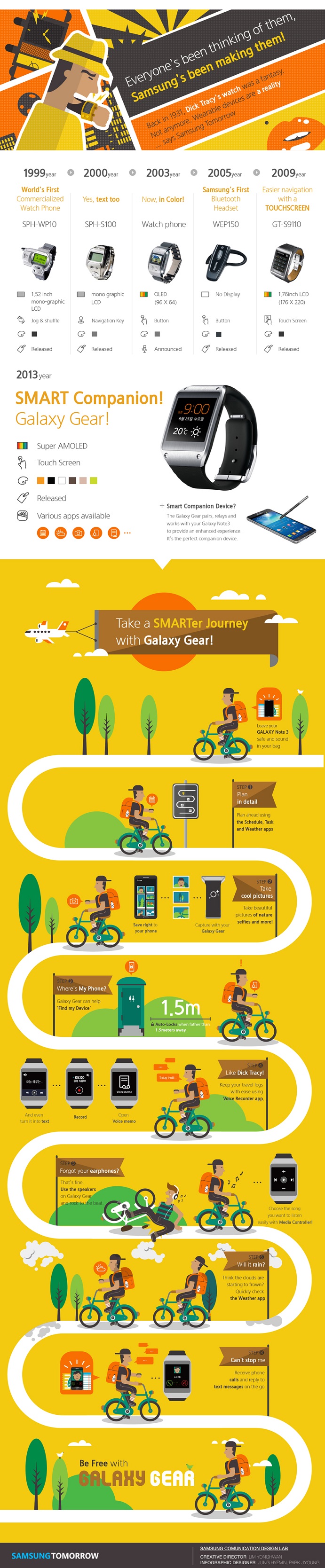
[Infographic] History of Wearable Devices
What would Dick Tracy say about the Galaxy Gear? No one knows, but we are pretty sure he would’ve enjoyed the Super AMOLED touch screen… and apps!
The introduction of the Galaxy Gear was a satisfying surprise for us, especially, since we were already familiar with the concept. Come on, let’s admit that we all had our own imaginary wearable device; at least once. As usual, Samsung has been on the same page as us. Actually, did you know that Samsung has been making wearable devices since the 20th century? That’s right! Samsung’s history of wearable devices began more than a decade ago. Take a look!
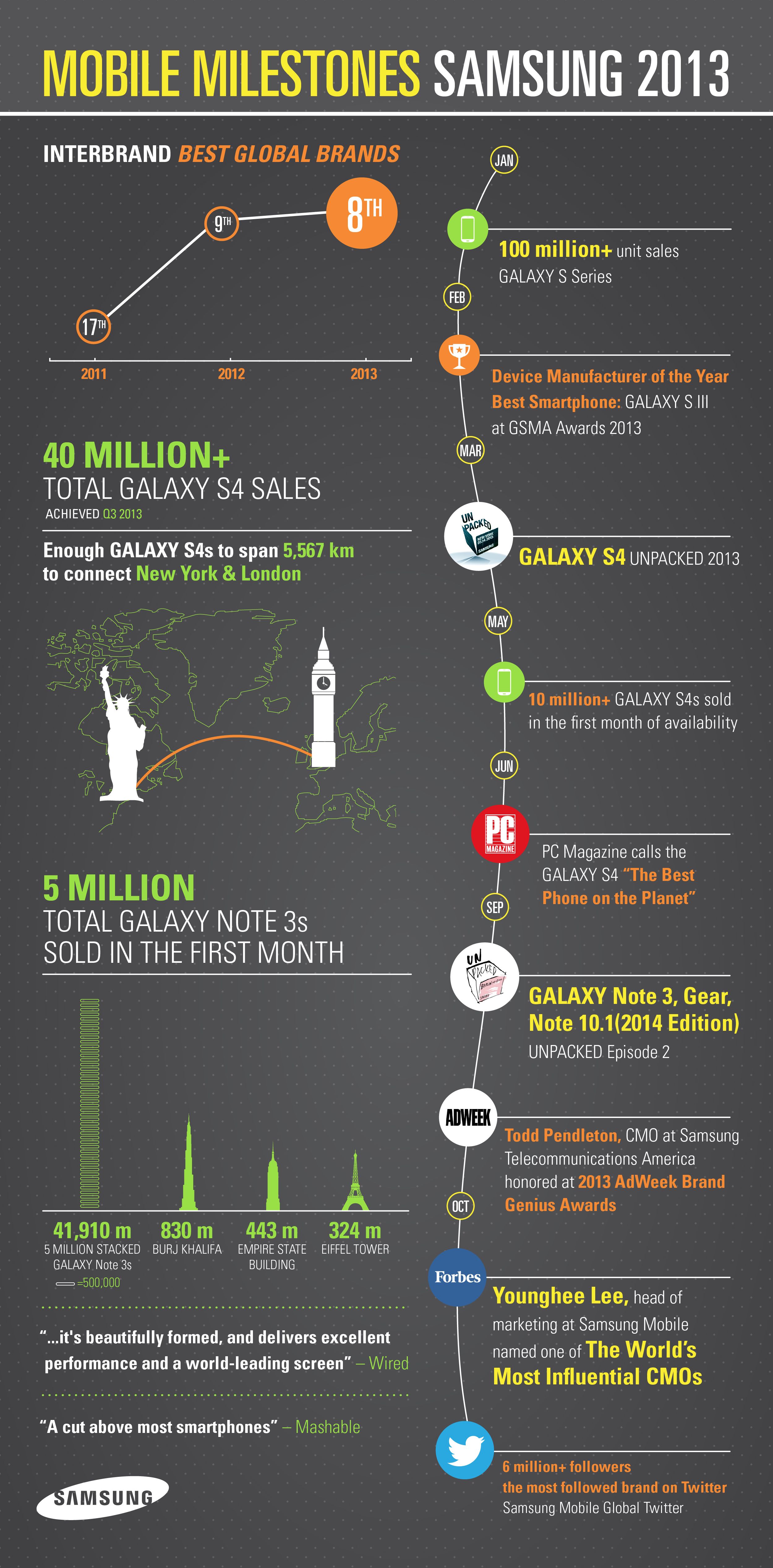
[Infographic] What Samsung Mobile Achieved in 2013
Don’t you say it is too early! We have less than 50 days to Year 2014 and the countdown has officially started on October when we had 100 days left. It is totally legitimate to start looking back on year 2013.
Yeah, this is how we would like to justify our emotional reminiscing of 2013 for Samsung Mobile. From having enough Galaxy S4 shipped out globally to connect New York and London (in theory, of course) to announcing the Galaxy Note 3, Galaxy Gear and more, 2013 was full of milestones for Samsung Mobile. In fact, there are so many, we decided to draw it out, so you can be as emotional as us. Here is the infographic full of facts of Samsung Mobile. Check it out!

Statement to simplify the "Regional Lock" at current Samsung products
Samsung has implemented regional SIM lock feature in current device to your respective region to provide customers the best possible mobile experience and customer service to the different needs in different regions to adapt.
Samsung the feedback of its customers has taken to heart and improves the activation of regional SIM lock and simplified. The first activation of a device with regional SIM lock feature should be used with a SIM card from a provider from the European region. A device from the Europe region * is immediately ready when dialing the SIM card from the Europe region in a network within the European region and is used to make phone calls as normal. In practice this means that customers in Germany have the phone with a SIM card of a provider from the European region after the first use of your device only five minutes in the German mobile network to deactivate the regional SIM lock feature. It does not matter if the usage time of five minutes is achieved actively or passively as a caller callee. Then, the regional SIM Lock is permanently disabled. The new solution is part of Android 4.3 Jelly Bean update that note 3 is already available for the Samsung GALAXY. More updates for the Samsung Galaxy S4, S4 mini, S III and Mark II will be available in the coming weeks via FOTA system update (Firmware Over The Air). If a user device to be from the Europe region with a SIM card from a provider who is not from the Europe, in operation and the device does not accept a SIM card, he can unlock his device from Samsung Customer Service.
If customer questions regarding the "regional lock" function of their product, they can contact customer service.
Samsung Customer Service can be reached by phone: 0180 667 267 864 (* 0,20 € / call from a landline and a maximum of 0,60 € / call from a mobile phone, from the International delivery service hours: Monday to Friday: 08:00. -20:00 clock, Saturday: 09:00-17:00 clock) or at: * To http://www.samsung.com/de/info/contactus.html Region Europe include
countries of the European Economic Area (EEA) :
Austria, Belgium, Bulgaria, Cyprus, Czech Republic, Denmark, Estonia, Finland, France, Germany, Greece, Hungary, Iceland, Ireland, Italy, Latvia, Liechtenstein, Lithuania, Luxembourg, Malta, Netherlands, Norway, Poland, Portugal, Romania , Slovakia, Slovenia, Spain, Sweden, UK, Switzerland, Croatia
non-EU/EEA:
Albania, Andorra, Belarus, Bosnia and Herzegovina, Macedonia, Moldova, Monaco, Montenegro, San Marino, Serbia, Vatican City
http://g-ecx.images-amazon.com/images/G/03/electronics/aplus/samsungsimlock2.pdf
Samsung the feedback of its customers has taken to heart and improves the activation of regional SIM lock and simplified. The first activation of a device with regional SIM lock feature should be used with a SIM card from a provider from the European region. A device from the Europe region * is immediately ready when dialing the SIM card from the Europe region in a network within the European region and is used to make phone calls as normal. In practice this means that customers in Germany have the phone with a SIM card of a provider from the European region after the first use of your device only five minutes in the German mobile network to deactivate the regional SIM lock feature. It does not matter if the usage time of five minutes is achieved actively or passively as a caller callee. Then, the regional SIM Lock is permanently disabled. The new solution is part of Android 4.3 Jelly Bean update that note 3 is already available for the Samsung GALAXY. More updates for the Samsung Galaxy S4, S4 mini, S III and Mark II will be available in the coming weeks via FOTA system update (Firmware Over The Air). If a user device to be from the Europe region with a SIM card from a provider who is not from the Europe, in operation and the device does not accept a SIM card, he can unlock his device from Samsung Customer Service.
If customer questions regarding the "regional lock" function of their product, they can contact customer service.
Samsung Customer Service can be reached by phone: 0180 667 267 864 (* 0,20 € / call from a landline and a maximum of 0,60 € / call from a mobile phone, from the International delivery service hours: Monday to Friday: 08:00. -20:00 clock, Saturday: 09:00-17:00 clock) or at: * To http://www.samsung.com/de/info/contactus.html Region Europe include
countries of the European Economic Area (EEA) :
Austria, Belgium, Bulgaria, Cyprus, Czech Republic, Denmark, Estonia, Finland, France, Germany, Greece, Hungary, Iceland, Ireland, Italy, Latvia, Liechtenstein, Lithuania, Luxembourg, Malta, Netherlands, Norway, Poland, Portugal, Romania , Slovakia, Slovenia, Spain, Sweden, UK, Switzerland, Croatia
non-EU/EEA:
Albania, Andorra, Belarus, Bosnia and Herzegovina, Macedonia, Moldova, Monaco, Montenegro, San Marino, Serbia, Vatican City
http://g-ecx.images-amazon.com/images/G/03/electronics/aplus/samsungsimlock2.pdf
[Infographic] Samsung takes a look at its achievements in 2013 and decade-long history of wearable devices
Well, 2013 is still a couple of months away from making way for 2014, but Samsung feels it’s time to look back on what it has achieved in this rather eventful year for mobile technology. Launching the Galaxy S4, Note 3, and the Galaxy Gear, achieving millions of sales for its devices (enough units of the Galaxy S4 to theoretically connect New York and London), and more; it’s all part of what Samsung feels were milestones for the company, and it’s all laid out in a nice and pretty infographic for you to look at and marvel at.
Furthermore, Samsung is also taking a look back at its history of making wearable devices, from the first commercialized watch phone way back in 1999, to the very recent Galaxy Gear, the first smartwatch to be made available in the market. Again, all this is laid out in an infographic, which you can take a look at down below. Once you’re done, don’t forget to leave a comment on your favorite “milestone” of Samsung’s from 2013.
Samsung issues yet another statement to clarify its regional lock policy
Right when we had almost pushed Samsung’s regional lock policy – which debuted on the Galaxy Note 3 – out of our minds, we’re getting a nice little refresher that will keep it haunting us for some time to come. Yes, Samsung isn’t backing down and throwing the whole practice of regional locking down the drain. But as a result of all the confusion it has created ever since it was discovered, Samsung has released an official document explaining how the region lock policy works, as an answer to the negative feedback the Note 3 received on Amazon.
The explanation is the same as before – the region lock basically means that if you buy a device from a country in the European region, the first SIM that is used on the device must be from a carrier/operator in one of the countries from the same region. Once the device is powered on with such a SIM, it will work any SIM card anywhere in the world. Also, since this is something that wasn’t working properly for some users, Samsung says that they’ve improved the whole process so that it works better in the near future.
Every Samsung device that comes with or gets an update to Android 4.3 will have the region lock in place, which means older devices like the Galaxy S3, S4, and S4 mini will have this “protection” after they’re updated to Android 4.3. Yes, the evil that has plagued customers since the launch of the Galaxy Note 3 will continue to exist, but it’s great that Samsung is taking the time to at least make things clearer and be transparent with consumers. Something is better than nothing, right?
Here’s the translated statement, with the original text (in German) available at the source link.
Statement to simplify the “Regional Lock” at current Samsung products
Samsung has implemented regional SIM lock feature in current device to your respective region to provide customers the best possible mobile experience and customer service to the different needs in different regions to adapt.
Samsung the feedback of its customers has taken to heart and improves the activation of regional SIM lock and simplified. The first activation of a device with regional SIM lock feature should be used with a SIM card from a provider from the European region. A device from the Europe region * is immediately ready when dialing the SIM card from the Europe region in a network within the European region and is used to make phone calls as normal. In practice this means that customers in Germany have the phone with a SIM card of a provider from the European region after the first use of your device only five minutes in the German mobile network to deactivate the regional SIM lock feature. It does not matter if the usage time of five minutes is achieved actively or passively as a caller callee. Then, the regional SIM Lock is permanently disabled. The new solution is part of Android 4.3 Jelly Bean update that note 3 is already available for the Samsung GALAXY. More updates for the Samsung Galaxy S4, S4 mini, S III and Mark II will be available in the coming weeks via FOTA system update (Firmware Over The Air). If a user device to be from the Europe region with a SIM card from a provider who is not from the Europe, in operation and the device does not accept a SIM card, he can unlock his device from Samsung Customer Service.
If customer questions regarding the “regional lock” function of their product, they can contact customer service.
Samsung Customer Service can be reached by phone: 0180 667 267 864 (* 0,20 € / call from a landline and a maximum of 0,60 € / call from a mobile phone, from the International delivery service hours: Monday to Friday: 08:00. -20:00 clock, Saturday: 09:00-17:00 clock) or at: * To http://www.samsung.com/de/info/contactus.html Region Europe include
countries of the European Economic Area (EEA) :
Austria, Belgium, Bulgaria, Cyprus, Czech Republic, Denmark, Estonia, Finland, France, Germany, Greece, Hungary, Iceland, Ireland, Italy, Latvia, Liechtenstein, Lithuania, Luxembourg, Malta, Netherlands, Norway, Poland, Portugal, Romania , Slovakia, Slovenia, Spain, Sweden, UK, Switzerland, Croatia
non-EU/EEA:
Albania, Andorra, Belarus, Bosnia and Herzegovina, Macedonia, Moldova, Monaco, Montenegro, San Marino, Serbia, Vatican City
http://www.sammobile.com
The explanation is the same as before – the region lock basically means that if you buy a device from a country in the European region, the first SIM that is used on the device must be from a carrier/operator in one of the countries from the same region. Once the device is powered on with such a SIM, it will work any SIM card anywhere in the world. Also, since this is something that wasn’t working properly for some users, Samsung says that they’ve improved the whole process so that it works better in the near future.
Every Samsung device that comes with or gets an update to Android 4.3 will have the region lock in place, which means older devices like the Galaxy S3, S4, and S4 mini will have this “protection” after they’re updated to Android 4.3. Yes, the evil that has plagued customers since the launch of the Galaxy Note 3 will continue to exist, but it’s great that Samsung is taking the time to at least make things clearer and be transparent with consumers. Something is better than nothing, right?
Here’s the translated statement, with the original text (in German) available at the source link.
Statement to simplify the “Regional Lock” at current Samsung products
Samsung has implemented regional SIM lock feature in current device to your respective region to provide customers the best possible mobile experience and customer service to the different needs in different regions to adapt.
Samsung the feedback of its customers has taken to heart and improves the activation of regional SIM lock and simplified. The first activation of a device with regional SIM lock feature should be used with a SIM card from a provider from the European region. A device from the Europe region * is immediately ready when dialing the SIM card from the Europe region in a network within the European region and is used to make phone calls as normal. In practice this means that customers in Germany have the phone with a SIM card of a provider from the European region after the first use of your device only five minutes in the German mobile network to deactivate the regional SIM lock feature. It does not matter if the usage time of five minutes is achieved actively or passively as a caller callee. Then, the regional SIM Lock is permanently disabled. The new solution is part of Android 4.3 Jelly Bean update that note 3 is already available for the Samsung GALAXY. More updates for the Samsung Galaxy S4, S4 mini, S III and Mark II will be available in the coming weeks via FOTA system update (Firmware Over The Air). If a user device to be from the Europe region with a SIM card from a provider who is not from the Europe, in operation and the device does not accept a SIM card, he can unlock his device from Samsung Customer Service.
If customer questions regarding the “regional lock” function of their product, they can contact customer service.
Samsung Customer Service can be reached by phone: 0180 667 267 864 (* 0,20 € / call from a landline and a maximum of 0,60 € / call from a mobile phone, from the International delivery service hours: Monday to Friday: 08:00. -20:00 clock, Saturday: 09:00-17:00 clock) or at: * To http://www.samsung.com/de/info/contactus.html Region Europe include
countries of the European Economic Area (EEA) :
Austria, Belgium, Bulgaria, Cyprus, Czech Republic, Denmark, Estonia, Finland, France, Germany, Greece, Hungary, Iceland, Ireland, Italy, Latvia, Liechtenstein, Lithuania, Luxembourg, Malta, Netherlands, Norway, Poland, Portugal, Romania , Slovakia, Slovenia, Spain, Sweden, UK, Switzerland, Croatia
non-EU/EEA:
Albania, Andorra, Belarus, Bosnia and Herzegovina, Macedonia, Moldova, Monaco, Montenegro, San Marino, Serbia, Vatican City
http://www.sammobile.com
Apple demands $380M in patent trial, but Samsung wants to pay $52M
The amount requested by Apple during opening arguments in a damages retrial is less than the $450 million awarded by a jury last year. And Samsung's proposal is much lower.
An Apple attorney told a jury on Wednesday that the company wants an additional $380 million in damages from Samsung's patent infringement, but Samsung says it should only have to pay $52 million.
The figures come on top of the $600 million Samsung already has to pay after a judge vacated about $450 million of the original award.
Apple attorney Harold McElhinny and Samsung attorney Bill Price made the comments during opening statements here at a retrial in the United States District Court for the Northern District of California. A new jury of eight people has been assembled to determine how much more Samsung owes Apple for infringing on five patents related to the iPhone's design and functionality.
"We will hear a lot from Samsung, saying no one would have purchased Apple products," McElhinny said. "But in its heart, Samsung knew it was a two-horse race."
He pointed to an internal Samsung document as "conclusive evidence Apple lost sales because of Samsung."
http://news.cnet.com/8301-13579_3-57612159-37/apple-demands-$380m-in-patent-trial-but-samsung-wants-to-pay-$52m/
An Apple attorney told a jury on Wednesday that the company wants an additional $380 million in damages from Samsung's patent infringement, but Samsung says it should only have to pay $52 million.
The figures come on top of the $600 million Samsung already has to pay after a judge vacated about $450 million of the original award.
Apple attorney Harold McElhinny and Samsung attorney Bill Price made the comments during opening statements here at a retrial in the United States District Court for the Northern District of California. A new jury of eight people has been assembled to determine how much more Samsung owes Apple for infringing on five patents related to the iPhone's design and functionality.
"We will hear a lot from Samsung, saying no one would have purchased Apple products," McElhinny said. "But in its heart, Samsung knew it was a two-horse race."
He pointed to an internal Samsung document as "conclusive evidence Apple lost sales because of Samsung."
http://news.cnet.com/8301-13579_3-57612159-37/apple-demands-$380m-in-patent-trial-but-samsung-wants-to-pay-$52m/
Apple asks for additional $380 million in damages, Samsung willing to pay only $52 million
Apple and Samsung are at it again. Sparks are flying from both directions in a retrial that will decide how much damages Samsung will pay to the Cupertino company, over the $600 million that was earlier supposed to be awared to Apple. Apple is now demanding an additional $380 million in damages from Samsung, but Samsung says it should only have to pay $52 million.
Samsung is of the opinion that Apple is demanding more money than it is entitled to, and that customers didn’t just buy Samsung devices because of the bounce-back and other features that infringed on Apple patents, but because of other factors including larger screens, removable batteries, 4G LTE connectivity, and more. The retrial is at an early stage at this time so it remains to be seen what additional damages Samsung will pay, but one thing is certain: Apple isn’t going to back down, and neither is Samsung, so this case could go on for some time to come.
But hey, at this point, this is all part of the regular routine, right?
http://www.sammobile.com
Samsung is of the opinion that Apple is demanding more money than it is entitled to, and that customers didn’t just buy Samsung devices because of the bounce-back and other features that infringed on Apple patents, but because of other factors including larger screens, removable batteries, 4G LTE connectivity, and more. The retrial is at an early stage at this time so it remains to be seen what additional damages Samsung will pay, but one thing is certain: Apple isn’t going to back down, and neither is Samsung, so this case could go on for some time to come.
But hey, at this point, this is all part of the regular routine, right?
http://www.sammobile.com
Samsung to ship 50 percent of smartphones in Africa this year, aims to double sales in 2014
Africa is proving to be quite the stronghold for Samsung, as the company has announced that it has shipped more than 50 percent of all the smartphones sold in the continent this year. ”Samsung this year will ship 50 percent of all the smartphones in Africa,” Thabiet Allie, head of content and services for Samsung Electronics Africa, told a telecoms conference in Cape Town late on Tuesday.
Smartphone penetration in Africa is still pretty low at 4 percent, but from the 20 million smartphones sold in the continent this year, more than half had Samsung’s name on them. The Korean manufacturer isn’t going to be content, however, as it aims at doubling its sales in Africa next year. ”Next year we are looking at doubling this number and the year after probably doing a substantial increase,” Allie said at the annual AfricaCom conference. It’s a goal that stands right in line with Samsung’s plans to focus on low-end and mid-range devices next year, and judging by the marketing prowess Samsung possesses, it’s a goal that might not be too hard to achieve.
http://www.sammobile.com
Smartphone penetration in Africa is still pretty low at 4 percent, but from the 20 million smartphones sold in the continent this year, more than half had Samsung’s name on them. The Korean manufacturer isn’t going to be content, however, as it aims at doubling its sales in Africa next year. ”Next year we are looking at doubling this number and the year after probably doing a substantial increase,” Allie said at the annual AfricaCom conference. It’s a goal that stands right in line with Samsung’s plans to focus on low-end and mid-range devices next year, and judging by the marketing prowess Samsung possesses, it’s a goal that might not be too hard to achieve.
http://www.sammobile.com
Samsung aims to double its smartphone sales in Africa in 2014
Samsung Electronics expects to supply half of the smartphones sold in Africa this year and aims to double these sales on the continent in 2014, an executive said.
Africa has a growing young population that is increasingly tech savvy and urbanized. This is attracting foreign sellers of consumer products like smartphones, especially as markets stagnate or shrink in more developed nations.
Although smartphones are gaining popularity across the continent, they are still a novelty. At the end of 2012, sub-Saharan smartphone penetration was 4 percent, compared with a global average of 17 percent, according to industry body GSMA.
"Samsung this year will ship 50 percent of all the smartphones in Africa," Thabiet Allie, head of content and services for Samsung Electronics Africa, told a telecoms conference in Cape Town late on Tuesday.
Out of the 100 million or so mobile phones sold in Africa this year, 20 million are smartphones and slightly more than half of those are models made by the South Korean company, he said.
"Next year we are looking at doubling this number and the year after probably doing a substantial increase," Allie said at the annual AfricaCom conference.
GSMA forecasts smartphones will constitute 20 percent of the Africa market by 2017 as devices priced at below $50 become a reality.
Smartphone use in South Africa is already slightly above the global average, with Blackberry a market leader.
One South African company plans to start assembling a $260 smartphone for the African market in 2014.
http://www.reuters.com
Africa has a growing young population that is increasingly tech savvy and urbanized. This is attracting foreign sellers of consumer products like smartphones, especially as markets stagnate or shrink in more developed nations.
Although smartphones are gaining popularity across the continent, they are still a novelty. At the end of 2012, sub-Saharan smartphone penetration was 4 percent, compared with a global average of 17 percent, according to industry body GSMA.
"Samsung this year will ship 50 percent of all the smartphones in Africa," Thabiet Allie, head of content and services for Samsung Electronics Africa, told a telecoms conference in Cape Town late on Tuesday.
Out of the 100 million or so mobile phones sold in Africa this year, 20 million are smartphones and slightly more than half of those are models made by the South Korean company, he said.
"Next year we are looking at doubling this number and the year after probably doing a substantial increase," Allie said at the annual AfricaCom conference.
GSMA forecasts smartphones will constitute 20 percent of the Africa market by 2017 as devices priced at below $50 become a reality.
Smartphone use in South Africa is already slightly above the global average, with Blackberry a market leader.
One South African company plans to start assembling a $260 smartphone for the African market in 2014.
http://www.reuters.com
AT&T Galaxy S4 receiving Android 4.3 update
Verizon, Sprint, and US Cellular variants of the Galaxy S4 are being joined by the AT&T variant of Samsung’s flagship today in the list of S4s that have been updated to Android 4.3. The update’s now available over-the-air, at a gigantic size of 719MB, and as expected, brings features such as Galaxy Gear support, KNOX functionality, new TouchWiz features, improved camera firmware, and more, along withall the features of Android 4.3 (which aren’t exactly that many from a user-facing point of view).
As is always the case, the rollout will be gradual, so it might be a day or two before your turn arrives. Be sure to do a manual check through the Settings » About phone » Software updates menu on your S4, or give it a try through Kies (once the update becomes available through Kies, it will also show up on our firmware section, from where you’ll be able to download it and manually update).

New Xperia Tablet S firmware update fixes inaccurate clock time
New Xperia Tablet S firmware update fixes inaccurate clock time
http://www.xperiablog.net/2013/11/14/new-xperia-tablet-s-firmware-update-fixes-inaccurate-clock-time/
http://www.xperiablog.net/2013/11/14/new-xperia-tablet-s-firmware-update-fixes-inaccurate-clock-time/
TURN IT UP: NOKIA MUSIC APIS ARE READY TO ROCK
Using the Nokia Music APIs developers can easily integrate music functionality and content directly into their Windows Phone apps without licensing worries, allowing them to create new and differentiated experiences that also sound totally awesome.
“The key to the success of Nokia Music has been Mix Radio – hundreds of mixes curated by our experts covering every conceivable musical genre. Plus the ability to create your own mixes based on the artists you love,” says Martin Banham, product owner of Nokia Music for Windows Phone. “We wanted to give third party developers access to Mix Radio in order to enrich their own apps.”

The Nokia Music API’s already let developers integrate a range of features like play mixes and show nearby gigs. And now, Nokia has released two new Music APIs to help developers take their apps to the top of the charts. There is “Get User Play History” which allows developers to access the tracks users’ have played recently; and “Get User Top Artists” which allows developers to access a chart of users’ top artists for the last week.
“Developers can display music content such as charts, search and mixes within their Windows Phone applications, and integrate with the Nokia Music Windows Phone app to allow their users a full listening experience,” says Nathan Cox, senior product manager for Nokia Music APIs.
Since the initial launch of the Nokia Music APIs earlier this year, Nokia has worked on several innovative partnerships with both big brands and independent developers.

Adding Nokia Music to the mix
One striking example is Adidas, who integrated Nokia Music into their miCoach app for Windows Phone, so you can enjoy various music mixes while you work out.
Another cool example comes from Netherlands-based start-upOrange Tribes. They are a part of the AppCampus accelerator program, and they collaborated with the Nokia Music team on their new app Sleeve (as in, the inside of a record album).
Sleeve uses the Nokia Music API to deliver an amazing experience. The app brings together everything music, including information from your favorite artist or band. You can import information from Facebook or your personal music Library. You can also decide to randomly select artists or bands. All the relevant news from sources like Facebook, Twitter, YouTube, Soundcloud, Instagram and Music Brainz will display in the app. The team behind Sleeve continues to add new updates every month, and the app is compatible with all Nokia Lumia Windows Phones.
Supporting that independent spirit
Nokia works with independent developers through events and hackathon contests, resulting in some very innovative applications that incorporate Nokia Music features. One example is a name-that-tune style game called In Two by UK-based developer Scott Lovegrove that is off to a great start in the Windows Phone Store.
Documentation and code samples for the Nokia Music APIs are available in the Nokia Lumia Developer’s Library.
LET THE ALIEN WITH A MAGNET PULL YOU IN + DONATING TIME
Is it an arcade game? A puzzle game? A platformer? Some new-fangled pinball game? It’s hard to say – and honestly, maybe it is a little bit of all of these formats – but Alien with a Magnet certainly has a vibe all its own.
This Windows Phone game by Netherlands-based indie developer Lukas Hoenderdos of Rejected Games, has more than 45 levels where you must carefully maneuver your little green alien in his spacecraft around oddly shaped planets collecting stars, jewels and other shiny objects that seem to be orbiting each planet.

Use a light touch
You can play the game with just one finger – a nice touch. To move in the game, you hold your finger down on top of (or near) the planet that you want to travel around. So, in some ways your finger is like a magnet attracting the alien. Let go and the alien flies off in whatever direction he was heading in at that time.
Here’s where timing comes in. You want to release your finger just at the point when you are moving in the direction of the next planet that requires navigating, so you can collect more stars and whatnot. If you miss, you will fly off course, and possibly even crash into meteors or other space-based junk. At that point, it’s a do-over for you as you restart the level.
As you might expect, the levels in the game continue to get progressively harder and more detailed. Additionally, there is a timed mode, so you can see how quickly you can complete levels in the game.
Handcrafted for your enjoyment
Another nice touch is the fact that the game is, as the developer notes, “handcrafted.” The amount of effort required to build this game can be seen in the detail rendered in each level – down to the specific placement of each and every obstacle. All of the geeks out there will appreciate that the developer used Unity to build the game.

And then there is the animation style itself. That cute little bugged-eyed alien appears to be something of an homage to filmmaker and animator Don Hertzfeldt. We say this in part because the developer at Rejected Games attributes his company name back to some of Don’s earlier work; and if you look at Don’s animation you will certainly see sources of inspiration for the alien in the game.
Right now, Alien with a Magnet is one of the three Red Stripe Deals in the Windows Phone Store, and is available for just $0.99 (USD) – half off the regular price for the next week.
Need another reason to try Alien with a Magnet? The game just won 3rd place in the Unity Windows Phone 8 app contest.
You can learn more about the game from the official site.
It’s time to make a donation
Do you need to keep track of time – down to the millisecond? Then you should take a look at Avirall Time Suite, which is another Red Stripe Deal, and a Windows Phone exclusive app. But, don’t mistake it for simply a stopwatch – you actually get a suite of five professional grade time-keeping tools. Avirall includes a Quick Stopwatch, Stopwatch Pro for sports use and students, Timer Pro, Activity Logger, and Project tracker to keep track of projects, tasks, money, profits, and payments. You can create and maintain multiple timekeepers with each of the tools and keep them running for as long as you need. Timekeepers in Avirall maintain themselves even if you shut your device off completely, and you can edit, remove, or keep timekeepers on your device.

Right now, Avirall Time Suite is only $0.99 (USD) in the Windows Phone Store, a 75% discount off its regular price. And, the developer of the app, Sanjay Sharma, has promised to donate a portion of the proceeds from the revenue generated by the purchase of Avirall Time Suite while it is a Red Stripe Deal to the relief efforts for those affected by Typhoon Haiyan in the Philippines. So you get a great app, and the relief effort will get much needed donations.
More information about Avirall Time Suite is available on the developer’s website.
BE A NEWS PHOTOGRAPHER WITH SCOOPSHOT
Have you captured an amazing picture with your Lumia smartphone that you’d like to share with the world and then get paid for it? With Scoopshot you can!
Scoopshot is an app that connects everyday photojournalists with media and companies who are looking for great authentic images taken by anyone.
Here’s how it works. You download the app and register for the service. Then you take an image with the Scoopshot app, set the price and then watch (and hope) it’ll get purchased and published by one of the companies who’ve signed up to use the service. You can also take part in specific photojournalistic tasks and challenges created by those companies.
Yesterday at Slush, we sat down with Petri Rahja, the CEO of Scoopshot, to find out more.

What’s a typical user of the Scoopshot app?
We currently have more than 350,000 registered users in more than 170 countries across different platforms, including Windows Phone. A typical user is probably 15-35 years old, interested in photography and who want to influence through great photography.
We also have more than 60 media companies in 19 different countries, who use the service daily. For example Metro International and Newscorp Australia are already using it and more media companies are signing up all the time.
What makes the app appealing for photographers and companies who use it?
For those who upload pictures to Scoopshot, the opportunity to earn money is of course an important factor. There is also a gamification element in there, and it’s exciting for the user to see if an image gets bought and for what price. But for many users, the motivation to use the service is to actually improve as a photographer.
We’ve noticed that brands have an ever-growing need for more authentic pictures. They want pictures of real people in real situations, and Scoopshot can provide that.
Also, some of the media companies who use the service have found that Scoopshot enables better engagement with their readers, compared to Facebook and Twitter for example. Scoopshot gives them the ability to tap into people’s everyday lives, invite them to contribute to news production and it’s a good way to get the youth to get interested in traditional media.
Is it possible to make money with Scoopshot?
Yes it is! We have a couple of guys here in Finland who have already earned thousands of euros with the service. One of them is Arto Mäkelä, who has earned more than 20,000 euros.
The price of an image varies from 2.5 to 25 euros. But if a company wants exclusive rights to your image, you have a chance to earn even more.
What tends to happen is that when you successfully sell one or two images to a company, they come back for more. It’s easy to create these type of connections in Scoopshot. It’s great for the company and the photographer.

What makes a good Scoopshot image?
This is a very good questions and it’s actually difficult to nail down exactly what makes a good image. It can be anything from a bird in a subway to an image of a big event happening somewhere in the world. Also images about special ”brand moments” do very well.
Picture quality is also very important and the photos submitted to Scoopshot are generally of very good quality. I have to say though that images taken with the Nokia Lumia 1020, have moved up the image quality to a completely new level.
What we’re seeing is that images taken with a Nokia Lumia have a lot better chances to get sold. The “submit-sold” ratio for images taken with a Lumia device is 20% higher compared to other platforms. The quality is just so good!
Who owns the rights for the images that are submitted to the service?
The rights stay with the user until the image has been sold. And depending on the licensing terms for the image, the user can re-sell the image over and over again. Only exception is when a company buys exclusive rights for the image, then the rights transfer to that company as part of the deal.
Can you share a couple of practical tips for Scoopshot users?
Stay still when you take the image to ensure your object is in focus. Also pay attention to the framing of the image and the positioning of your object – it doesn’t always have to be in the center. And keeping the horizon straight makes your photo look more professional.
Yesterday at Slush it was announced that you have raised $3.9 million funding – what are you planning to do with that money?
We will use the funding to realize our potential and expand to new markets. US is a hugely important market for us where we see a great opportunity both in terms of user generated photography and the companies who need authentic imagery. This funding will help us drive our growth there, and later on in other markets too.
A MILLION PLUS REASONS WHY WE LOVE TWITTER
It launched in 2006 and was nearly called Smssy, Throbber and Friendstalker.
Now, the far more aptly named, Twitter has more than 200 million active users worldwide. It took three years, two months and one day for the first billion Tweets to be sent on the platform. Incredibly, the same number are now sent every 48 hours. Hardly surprising then that we’ve been so loved up with it since we launched @Nokia in 2007. Six years later and our love is stronger than ever. Here’s why it sends our hearts all of a twitter.
1. We can help everyone grow a mo.

2. You can show us how fashionistas roll, mobile style.

3. We can share historic moments in all their tablet-tastic glory.

4. We can have indestructible fun together.

5. We can have a laugh with our friends.

6. You can open your heart to us and we can open ours back.

7. We can roll with the leaks.

8. We can spread the Lumia love.

9. We can have a smashing time with Miley.

10. You can blow our minds with your magic

And the other million plus reasons? YOU! Yes, this week we hit over a million followers. Thanks a million to you all. To celebrate we’re creating something, very, very special, which you’re all quite literally part of. We’ll be revealing it to the world in the next few days. In the meantime, if you fancy trying to guess what we’re up to, Tweet your answers with the hashtag #Nokia1M.
Any questions, leave them in the comment below or, of course, Tweet them to us @Nokia.
ASHA 501 APP SPOTLIGHT: PACKAGE TRACKER
Every now and again we spot an app that’s particularly clever or useful, and Package Tracker for the Nokia Asha 501 is one such app.
The app works in conjunction with a number of big courier services, letting you keep track of your parcels anytime, anyplace.
Using Package Tracker by Israeli-based Future Soft couldn’t be easier – and the design of the app is kept as simple as possible. Open it, and the main page displays information for packages that you’re already tracking, along with a button to add new parcels.

Pick a courier
Click “Add Tracking” to get started, and then choose the courier service you’re using. There are a host of international services – including DHL, FedEx, TNT and USPS, along with regional providers such as Canada and Australia Post.
Once you’ve picked your courier, simply add the tracking ID that the courier company gave you and click Submit. We tested the app with a pre-delivered FedEx parcel, and after connecting to the network, Package Tracker quickly pointed out: “Delivered”.
It’s possible to refresh the page if your parcel is still pending and in transit, so you’ll always have an idea what’s going on. Package Tracker has another killer feature too, with the ability to actually see where your parcel has been, and check out the details on Nokia Maps.

Follow your parcel’s journey
Once the package has been delivered, there’s a summary of every location it’s visited during the journey – including different depots that have been used for temporary storage, and even the times that the parcel arrived and left each location.
Package Tracker may be a simple and single-minded application, but it does its job brilliantly well. There are no unnecessary graphics or complicated menus – just enter the details you have and find out what’s going on with your parcel. What’s not to like?
Package Tracker is free to download in Nokia Store.
Langganan:
Komentar (Atom)